
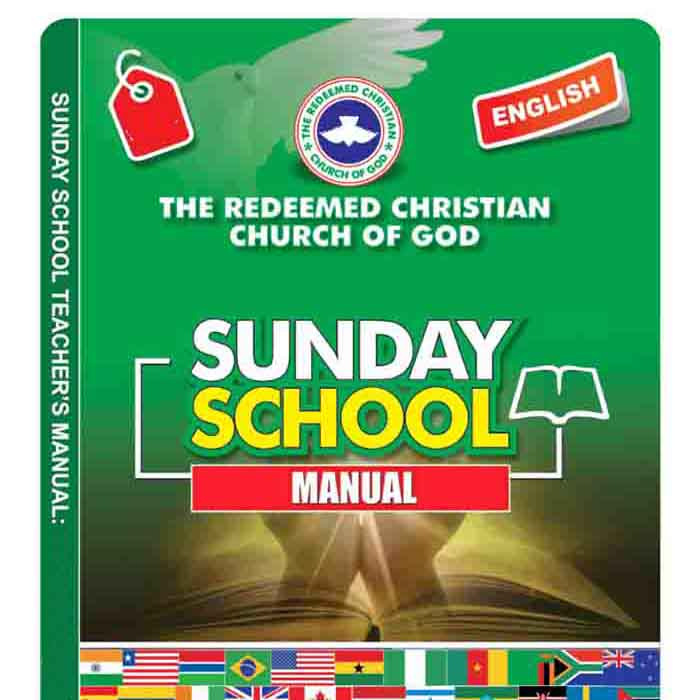
This is RCCG Sunday School Teachers manual for the adult class.
Today’s Lesson 17 topic: HANDLING CRITICISM
Date: 28 December 2025
Read:
Note: Check RCCG SUNDAY SCHOOL HYMN LYRICS
RCCG SUNDAY SCHOOL TEACHERS MANUAL LESSON 17 (28 DECEMBER 2025)
TOPIC: HANDLING CRITICISM
OPENING PRAYER:
Almighty God, help me to be open to constructive criticism.
PREVIOUS KNOWLEDGE:
The teacher should review the lesson for the previous week.
BIBLE READING
BIBLE PASSAGE: Matthew 14:3-10
3 For Herod had laid hold on John, and bound him, and put him in prison for Herodias’ sake, his brother Philip’s wife.
4 For John said unto him, It is not lawful for thee to have her.
5 And when he would have put him to death, he feared the multitude, because they counted him as a prophet.
6 But when Herod’s birthday was kept, the daughter of Herodias danced before them, and pleased Herod.
7 Whereupon he promised with an oath to give her whatsoever she would ask.
8 And she, being before instructed of her mother, said, Give me here John Baptist’s head in a charger.
9 And the king was sorry: nevertheless for the oath’s sake, and them which sat with him at meat, he commanded it to be given her.
10 And he sent, and beheaded John in the prison.
MEMORY VERSE:
“But when Peter was come to Antioch, I withstood him to the face, because he was to be blamed.” Galatians 2:11.
INTRODUCTION
Criticism is simply feedback that we may find difficult to bear but that we need if we are to expand our awareness of the impact of our actions on others. We can use criticism positively, or in a negative way that can lower self-esteem and cause anger or aggression (1Kings 21:15-20).
Generally, criticism helps identify areas for improvement and enhances self-awareness. Thus, handling criticism effectively is crucial for personal and professional growth.
TEACHER’S DIARY
LESSON AIM:
To encourage learners to see criticism as part of life.
TEACHING OBJECTIVES:
Through this lesson, students should be able to:
- Define criticism.
- Mention the types of criticisms known to them
- State how to deal with criticisms.
TEACHING PLAN:
- To achieve the above-stated objectives, the teacher should:
- Allow the students to recite the memory verse, read the Bible passage, contribute to the discus-sion, and do class activities and assignments.
- Allow the Assistant Teacher to see to the wellbeing of the class, and mark attendance and assignment.
- Teach the lesson outline, summarise, conclude, evaluate the lesson and give assignments.
TEXT REVIEW: Matthew 14:3-10
Herod arrested and put John the Baptist in prison because the latter criticised him for taking Herodias, his brother’s wife. Herod could not take John’s criticism but he was afraid to kill him because he felt the people might be angry. However, he ended up killing John the Baptist to please Herodias and her daughter.
Read this Bible passage carefully and write at least three lessons you can draw from it:
i….
ii. …
iii. .
iv…
v.
TEACHING METHOD:
The Discussion Method.
TIME MANAGEMENT:
The teacher should apply the two-lesson outline teaching time.
LESSON OUTLINE 1: TYPES OF CRITICISM
The class should discuss the types of criticisms known to them and the ones they have experienced. The teacher should thereafter guide the class through the following:
There are various types of criticism but our focus is on constructive and destructive criticisms.
Learning to recognise the difference between the two will help us deal with any criticism we may face.
A. Constructive criticism:
- Constructive criticism is designed to point out our mistakes (Galatians 2:11-14).
- It shows us where and how improvements can be made (Matthew 23:23).
- It should be viewed as useful feedback that can help us improve ourselves rather than put us down (2 Samuel 12:7-13).
B. Destructive criticism, on the other hand:
- Is malicious and hurtful (Proverbs 12:18a).
- In some cases, it leads to anger and/or aggression (Proverbs 15:1).
- Is usually intended as a personal attack, planned to harm someone’s self-esteem.
- Is usually not aimed at prottering solutions.
CLASS ACTIVITY 1:
Have you ever criticised someone destructively?
LESSON OUTLINE 2: DEAL WITH IT
A. Some people are critical by nature and may not always realise that they are hurting the feelings ., others. If you know a person who is critical of everything try not to take their comments too seriously, as this is just part of their personality.
B. To effectively respond to criticism,
- We need to relax and listen carefully to what the other person is saying (Proverbs 18:13; James 1:19).
- Ask for clarification if the criticism is somewhat vague.
- Decide whether the criticism is fair or unfair (Luke 12:57).
- Look to see if there is a ‘grain’ of truth in what is being said (2 Corinthians 13:8). This may be hard to do as we may have a desire to deny or defend our actions (1 Samuel 15:14-15).
- If we can find some truth in the statement, then we must take responsibility for our behaviour (2 Samuel 12:13).
- If the criticism is fair, ask for an alternative as to how to correct the situation and behave differently (Proverbs 11:14).
C. Please, take note of the following:
- Focus on the issue, not the person and practice self-retlection with a growth mindset (Genesis 13:7-2).
- Whatever the circumstance is, do not respond in anger as this will cause a scene and create bad feelings, and possibly a bad image of you (Ecclesiastes 7:9).
- Try to remain calm and treat the other person with respect and understanding (Ephesians 4:2).
- If you do feel you may lose control or say something potentially damaging, walk away. (Timothy 2:24).
CLASS ACTIVITY 2:
Do you think you can follow all the guidelines above, if not, would you be willing to try?
CONCLUSION: RCCG Sunday School Teachers Manual 28 December 2025
Build resilience and see criticism as an opportunity for growth.
EVALUATION:
Distinguish between the two types of criticism mentioned above.
CLOSING PRAYER:
Father, I receive the grace to be emotionally intelligent when criticised.
ASSIGNMENT: RCCG Sunday School Teachers Manual Lesson 17
Students should mention five (5) ways to deal with criticism (2×5=10 Marks).
Follow RCCG Live on:
DOWNLOAD RCCG Sunday School Teachers Manual Lesson 17 (28 December 2025) PDF


Leave a Reply