
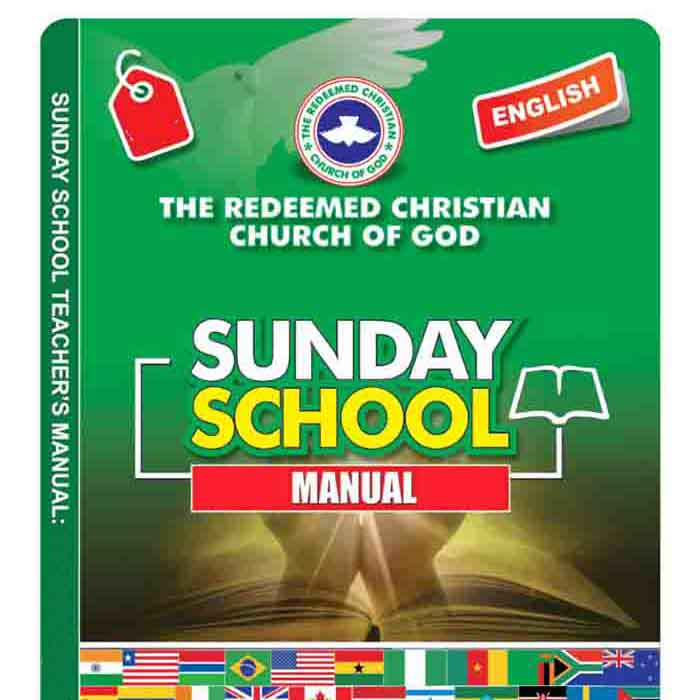
This is RCCG Sunday School Teachers manual for the adult class.
Today’s Lesson 5 topic: THE MINISTRY OF ANGELS
Read:
RCCG Sunday School Students Manual Lesson 5
Open Heaven 5 October 2026 Devotional
Note: Check RCCG SUNDAY SCHOOL HYMN LYRICS
RCCG SUNDAY SCHOOL TEACHERS MANUAL LESSON 5 (4 OCTOBER 2026)
TOPIC: THE MINISTRY OF ANGELS
OPENING PRAYER:
Father, help me to understand the ministry of your angels in Jesus mighty name.
PREVIOUS KNOWLEDGE:
The assistant teacher should review the lesson for the previous week.
BIBLE READING
BIBLE PASSAGE: Hebrews 1:13-14
13 But to which of the angels said he at any time, Sit on my right hand, until I make thine enemies thy footstool?
14 Are they not all ministering spirits, sent forth to minister for them who shall be heirs of salvation?
MEMORY VERSE:
“For he shall give his angels charge over thee, to keep thee in all thy ways.” Psalm 91:11.
LESSON INTRODUCTION:
Angels are supernatural beings, created by God. In both the Old Testament (Hebrew: mal’akh) and the New Testament (Greek: angelos), the word simply means “messenger.” (Revelation 19:10).
Biblically, angels are often strange and fearsome beings, sent by God as intermediaries to communicate with human beings on His behalf. Their messages include warnings, revelations, prophecies, deliverance and counsel. Angelic visitations bring comfort and protection, but at the same time, they can be mysterious and terrifying (Luke 2:9). The ministry of angels is rooted in the word of God (Psalm 103:20-21).
TEACHER’S DIARY
LESSON AIM: To enlighten the church about the ministry of Angels.
TEACHING OBJECTIVES: Through this study, students are expected to:
a. Describe the ministry of Angels.
b. Mention and explain the categories of Angels.
c. State the benefits of the ministry of Angels.
TEACHING PLAN: To achieve the above-stated objectives, the teacher should:
a. Allow the students to recite the memory verse, read the Bible passage, contribute to the discussion, and do class activities and assignments.
b. Allow the Assistant Teacher to see to the well-being of the class, and mark attendance and assignment.
c. Teach the lesson outline, summarise, conclude, evaluate the lesson and give assignments.
TEXT REVIEW: Hebrews 1:13-14
This passage provides a clear distinction between Christ, the Son of the living God and the Angels of God. Saying:
i. But to which of the Angels….. Vs. 13.
ii. Are they not all….. Vs. 14.
TEACHING METHOD: The Lecture Method.
TIME MANAGEMENT: The teacher should apply the two-lesson outline teaching time.
LESSON OUTLINE 1: DESCRIPTION AND CATEGORIES
A. Description
i. Angels are part of God’s creations (Psalm 148:2, 5), and they are spirit beings (Hebrews 1:13-14).
ii. In their makeup, they are greater in power and might than man (2 Peter 2:11; 2 Kings 19:35).
iii. Angels are not omniscient like God; for instance, they do not know the time of the coming of Christ (Matthew 24:36).
iv. They are not omnipresent; they are said to go from place to place (Daniel 9:21-23).
v. They are not to be worshipped nor prayed to by humans (Colossians 2:18; Revelation 22:8-9).
vi. They neither die nor get married (Luke 20:36; Mark 12:25).
vii. The number of the existing angels is unknown, but the Bible referred to them as innumerable (Hebrews 12:22).
B. Categories
Angels are in categories, including:
i. Archangels: The title “archangel” suggests authority or leadership among angels. Archangels are powerful warriors often seen as protectors of God’s people (Jude 1:9). They have a pivotal role in God’s end-time plan (1 Thessalonians 4:16).
ii. Cherubim: These are the protectors of sacred spaces and divine secrets (Genesis 3:24). They have multiple faces-a human, a lion, and an eagle-each indicating qualities such as wisdom, power, service and swiftness (Ezekiel 10:14-15). They also have multiple wings and are covered with eyes for awareness and vigilance (Ezekiel 10:9, 12). God is portrayed as riding on a cherub (Psalm 18:10).
iii. Seraphim: These are described as fiery, six-winged beings that stand in the presence of God. One pair of wings covers their eyes, one covers their feet, and with another they fly around the throne of the Lord (Isaiah 6:2). Their primary role is to worship and exalt God’s holiness (Isaiah 6:3). They serve as a bridge between God’s holiness and humanity’s imperfection (Isaiah 6:6-7).
iv. Angels: Angels rescued Lot and his family (Genesis 19:15-16), opposed Balaam and his donkey (Numbers 22:21-31), nearly destroyed Jerusalem for David’s sin (2 Samuel 24:10-16), and slaughtered 185,000 Assyrian soldiers overnight (2 Kings 19:35). Frequently, they appear holding a sword (Numbers 22:31). Sometimes, God’s angels can take the form of humans to deliver His message to man (Genesis 18 and 19).
CLASS ACTIVITY 1:
Share an experience when you felt God sent an Angel to help you.
LESSON OUTLINE 2: THE BENEFITS
We benefit from the ministry of angels in the following ways:
- Angels supply supernatural strength to God’s children (Luke 22:43).
- They give godly counsel/guidance (Matthew 1:20).
- They deliver revelation and prophetic messages (Luke 1:5-16).
- They are sent to deliver God’s children from danger (Psalm 34:7).
- God’s angels are present wherever a child of God is (Psalm 91:11).
CLASS ACTIVITY 2:
The class should share their experience of angelic revelations or visitations.
CONCLUSION: RCCG Sunday School Teachers Manual 4 October 2026
You need to know more and maximise the ministry of angels. Pray to God for angelic visitation now.
EVALUATION:
Briefly describe and state the categories of angels that you know.
CLOSING PRAYER:
Father, help me to enjoy the full benefits of the ministry of Angels in the name of Jesus.
ASSIGNMENT: RCCG Sunday School Teachers Manual Lesson 5
List five (5) situations that God might send His angels to minister to believers today (2X5=10 marks).
Follow RCCG Live on:
DOWNLOAD RCCG Sunday School Teachers Manual Lesson 5 (4 October 2026) PDF

Leave a Reply